Companion
Tools that name their source.
AI for companies, consultancies, universities and schools — wherever an answer has to be traceable, not merely plausible.
The applications
Two worlds, four tools.
The choice does not start with the tool but with where you work.
Wirtschaft · Hochschule
Für Unternehmen, Beratung und Hochschulen.
fact beantwortet Fragen aus Ihren Dokumenten. atrium verarbeitet, was täglich hereinkommt.
Schule · Unterricht
Für Schulen und Lehrkräfte.
learn erstellt Unterrichtsmaterial. school verwaltet den Schultag.
Why companion
Answers you can check.
A language model without a source gives you an opinion. Here the passage it came from sits right next to the answer.
Every statement leads back
Answers carry source markers. One click opens the passage in the document the sentence came from.
Your data stays in Europe
Processed in European data centres, nothing handed to training runs.
A human signs off
Where people are involved, review is mandatory. Whoever approves sees the basis alongside.
Choosing
Which one do you mean?
| fact | atrium | learn | school | |
|---|---|---|---|---|
| The question behind it | What do we know about this — and from where? | What has come in, and what needs doing? | What am I teaching with tomorrow? | How is this school day going? |
| Works on | Your documents, knowledge collections, web search | Mailbox, filing, business systems, receipts | Curriculum, open sources, your own material | Classes, timetable, marks, absences |
| Produces | A sourced answer, a report, a presentation | A structured record, a task, a note | A teaching unit, quiz, exercises, video | An entry, a mark, a message, an assignment |
| Companion app | none — runs in the browser | atrium for iOS | none — runs in the browser | school for iOS — the app is the product |
| Human release | Mandatory where people are involved | Before anything is written back | Before the class sees it | Marks and absences are set by the teacher |
| Availability | In use | In use | In use | In development — launching autumn 2026 |
What it looks like
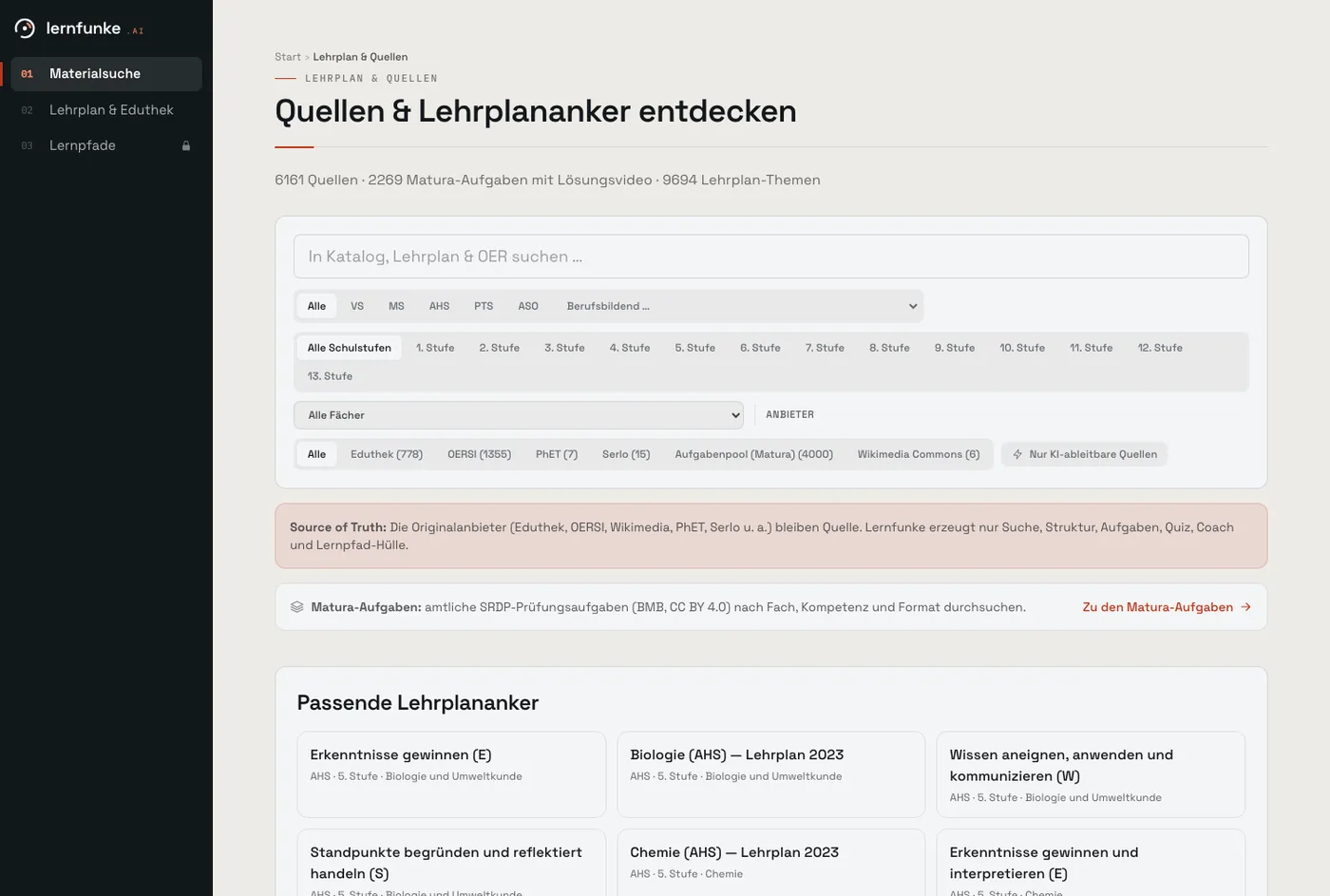
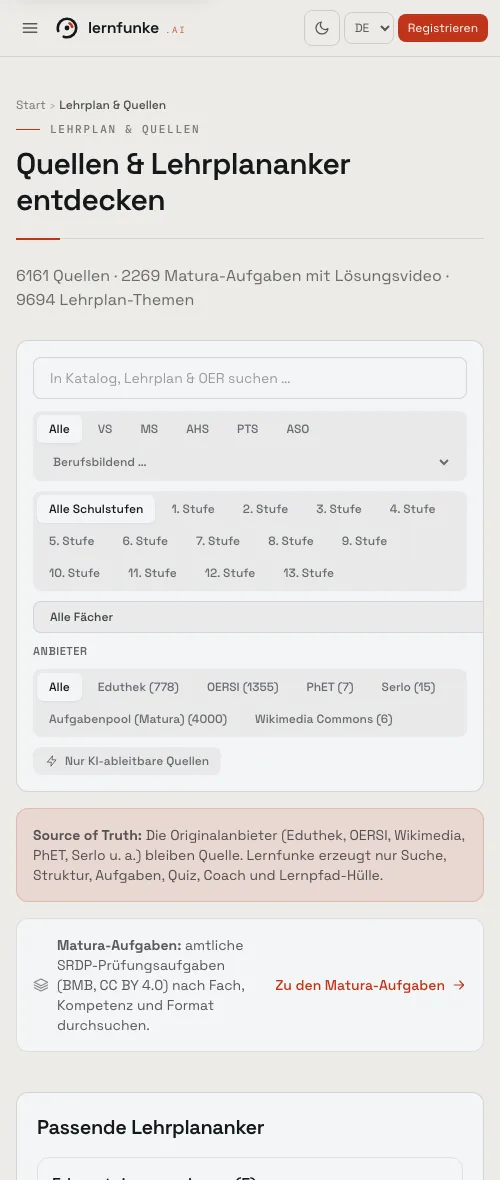
Screenshots from the running application.
Not mock-ups: the figures in the images are what the system held when the shot was taken.
On the move
Two apps for iOS.
atrium and school have a native companion: the same records, no second account. fact and learn run in the browser.
Common questions
What to settle first.
Where is our data processed?
In data centres inside the EU, with European models. You get the list of every service and its processing location before signing.
Is our content used for training?
No. The models we use run without a training licence, and that is in the data processing agreement.
Do we need our own IT department?
No. We host it for you or install it in your data centre. Either way we do the setup.
What if the AI gets something wrong?
It happens. That is why every statement can be checked against its source, and why nothing involving personal data leaves the system without human review.
Can we try it first?
Yes, two weeks with your own documents rather than a demo dataset.